Off-grid and generatorsExplainer
How Long Does an Electricity Connection Take in the UAE?
How long a new electricity connection takes in the UAE, what the charge is based on, and what a site can run on while it waits.
By Basheer Ansari, Managing Director & Co-Founder
4 min readLast reviewed
The short answer
A small connection can be quick. Larger loads that need network work can take many months, sometimes years. Some utilities offer a faster connection for a higher charge per kVA. Until the supply arrives, a site can run on solar and a battery, with an optional generator behind them.
On this page4 sections
How long does a new connection take?
It depends on how much load you connect. A small supply is often switched on fast, but a big one that needs the network built out can run to many months, and in some cases years. Where a utility sells a quicker route, it prices it higher for each kVA.
The wait is not the same for every site. It depends on how much load you connect and what the network has to build to serve it. For the plain version, see our off-grid solar with generator backup page.
- kVA
- A unit of connected load. A bigger connected load means a bigger connection.
What drives the wait?
Three things set the length of the wait:
- Load size: a bigger connected load means more network work behind it.
- Substation or transformer: where the network has to build or add one, the work is the slow part.
- The building's owner: a load extension stays with the building, so it belongs to the owner, not to you.
A load extension stays with the building. If you rent, the extra capacity you pay for is not yours to take when you leave.
What is the connection charge based on?
Connection charges are based on the load you connect. For a factory or large building they often run into hundreds of thousands of dirhams, and into millions where you also pay for a transformer or a substation.
Two sites of the same size can still differ, because the network work around each one differs. Ask for the charge in writing before you plan the opening date around it.
What can a site run on while it waits?
There are two common answers:
- A diesel generator on its own: it starts quickly, and you buy fuel for every hour it runs. Our solar or diesel guide sets the two side by side.
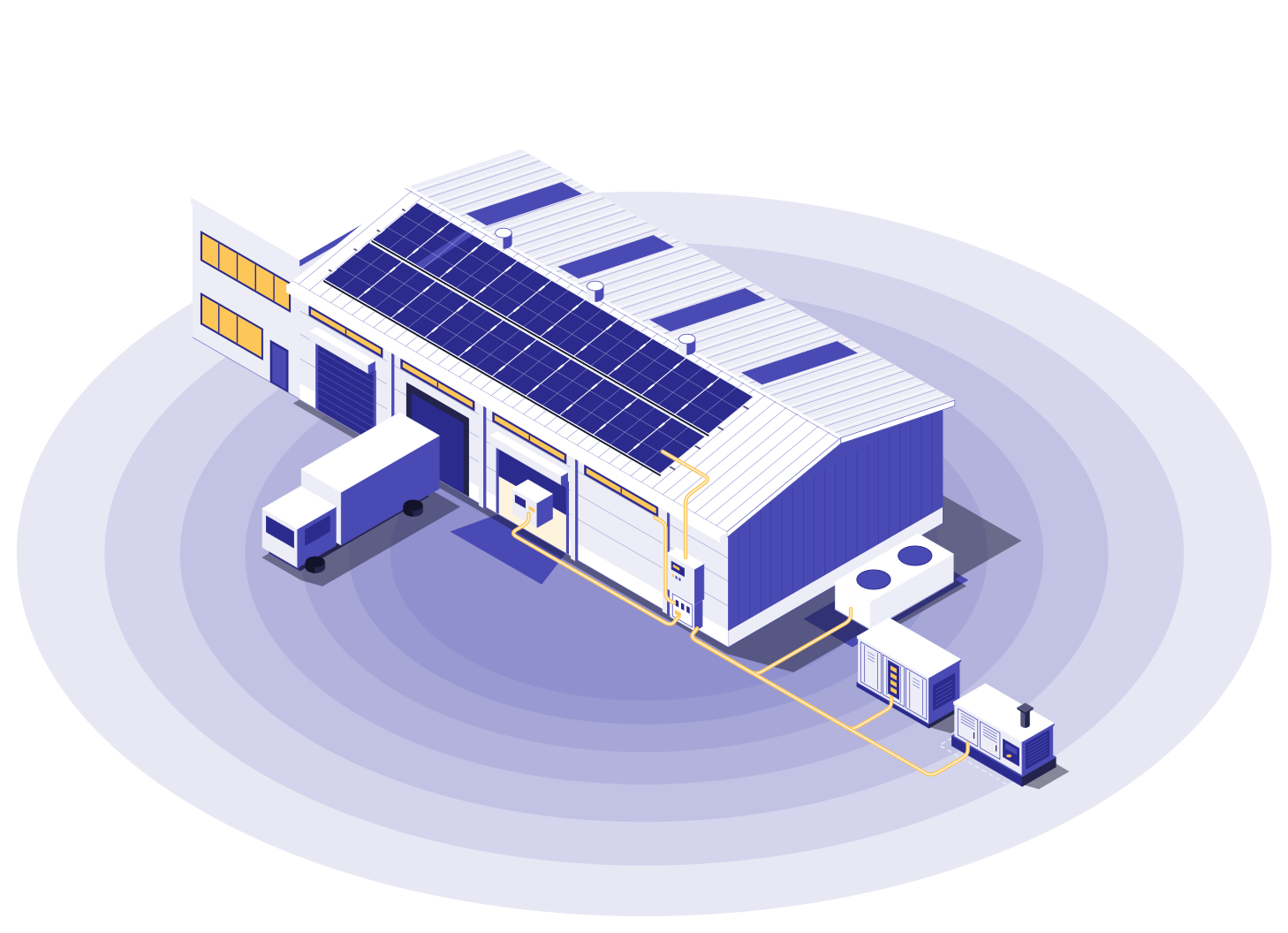
- Off-grid solar with generator backup: the panels run the site by day, a battery carries the evening and night, and an optional generator backs up the long cloudy spells. Our price covers the solar, the controller and the battery; a generator is quoted separately if you ask us to supply one, and if you already run one, the design can work with it.
Outside Dubai, a tenant whose connected load falls short can use the same system for the extra load. If you move, the system can be taken down and put back up at your next site. It's a paid service, done easily, and it makes more sense than paying for a load extension you leave behind.
Off-grid isn't offered for DEWA-connected sites in Dubai; it can be, for a site that isn't connected to DEWA, such as a remote site.
The sun does not need a substation. A site can switch on before the supply arrives.
Read how the system works, and what to send us, on the off-grid solar with generator backup page.
Connection FAQs
All 48 questions →Keep reading
- Off-Grid Solar for a New Factory: A Worked ExampleA worked example, not a client project: how off-grid solar, a battery and an optional generator are designed for a new UAE factory waiting on its connection.
ExplainerOff-grid and generators4 min readReviewed
- Solar or a Diesel Generator: Which Costs Less to Run?Diesel power typically costs three to four times grid power in fuel alone. How solar compares for sites off the grid, and when to keep a generator for backup.
ExplainerOff-grid and generators4 min readReviewed
- How Does Shams Dubai Approval Work, Step by Step?Every step of DEWA's Shams Dubai process, from eligibility and NOCs to net metering, timelines and costs, explained in plain English.
Step by stepApprovals and rules6 min readReviewed