Farms and remote sites
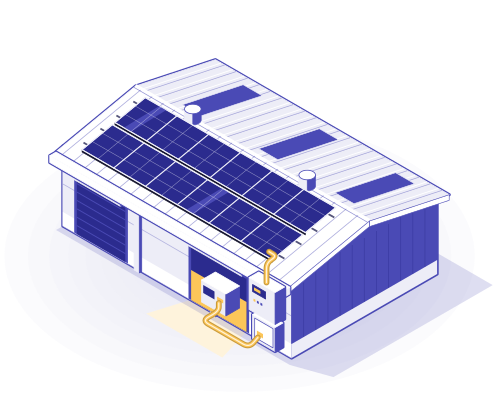
In Al Ain and Al Dhafra, hybrid and off-grid designs replace diesel spend.

Solar Oasis designs and installs rooftop solar in Abu Dhabi, where TAQA Distribution supplies the power and the Department of Energy regulates it.
Source: TAQA Distribution published tariff, as of September 2026. By Basheer Ansari, Managing Director & Co-Founder. Last reviewed .
The rates as TAQA Distribution publishes them. The higher your bill, the more of it sits on the top steps, and those are the units a daytime system takes off first.
Expat villas · kWh a month, VAT included
Businesses · flat rate, VAT included
Industry, under 1 MW · flat rate, VAT included
UAE-national villa accounts pay subsidised rates.
Savings in Abu Dhabi depend on your tariff band and system size: here's the honest map:
With sustained AC loads, the 26.8–30.5 fils bands make the maths work, with savings that depend on your usage and are smaller than on Dubai's upper slabs. The step from 26.8 to 30.5 fils is small, so there is less expensive top-slab use for solar to remove first than in Dubai.
With daytime operations at commercial tariffs, savings vary with usage. The commercial rate is lower than in Dubai and the northern emirates, so each kWh solar replaces is worth less.
savings are small: the case is sustainability-led, not savings-led, and our assessment says so plainly.
Per kWp, per year, if every unit is used on site (zero-export: only what you use by day counts). TAQA’s published rates (September 2026) include VAT, taken out here as a business recovers it. A private farm on the 4.5-fils agriculture rate saves far less, so we check your bill first. An estimate, not a quote.
Indicative, for a typical system. Assumes about 1,620–1,711 kWh per kWp a year for homes (tilted panels) and 1,517–1,602 for businesses, depending on emirate, published utility tariffs (as of September 2026) rising 3% a year, panel output falling 1% in year 1 and 0.4% a year after, and the electricity charge or kWh you enter (not water, sewerage or housing fees). Savings are a share of the electricity charge, shown with VAT as on your bill. Prices excl. VAT. Utility approvals included; municipality fees and NOCs excluded. Your survey-based proposal is fixed.
The capital's system differs from Dubai's in ways that matter to your design. Every system is designed to TAQA's current rules. Solar Oasis serves Abu Dhabi: bill analysis under TAQA's tariff bands, installation by our team, and ongoing care and monitoring.
Under TAQA's published tariff, expat villa accounts pay 26.8 fils/kWh up to 200 kWh a day (about 6,000 kWh a month) and 30.5 fils above; UAE-national villa accounts pay subsidised rates. This changes the maths honestly: for expat villas and businesses, solar can still work well in Abu Dhabi; for heavily subsidised accounts, savings are smaller, and we'll tell you which side of that line you're on before you spend anything.
Abu Dhabi's clean-energy build-out and the UAE Net Zero 2050 commitment both point one way.
Businesses that run mostly in the daytime (typically around 8 am to 5 pm) use most of their solar as it's produced, which is where zero export saves the most.
In Al Ain and Al Dhafra, hybrid and off-grid designs replace diesel spend.
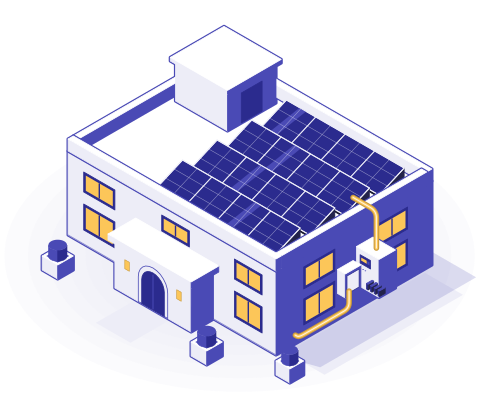
Khalifa City, Al Raha, Yas, Saadiyat, MBZ City, and Al Ain's family districts: residential solar sized to real AC loads.
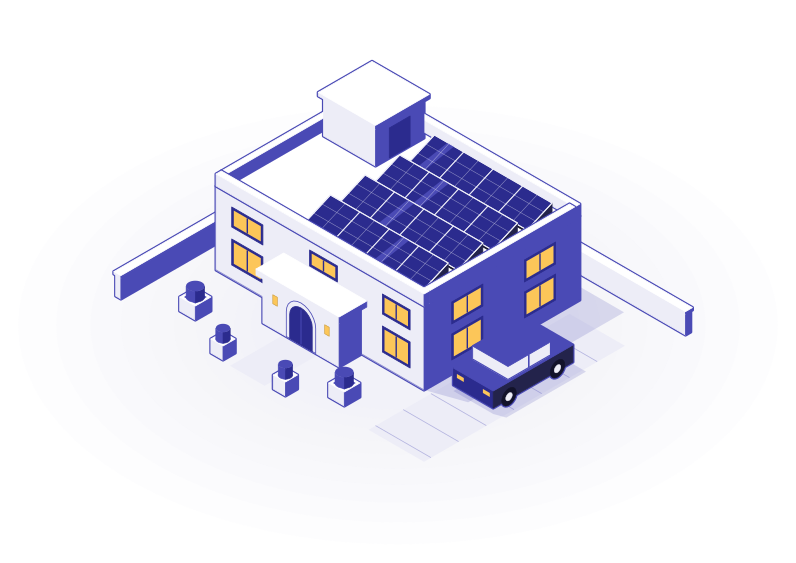
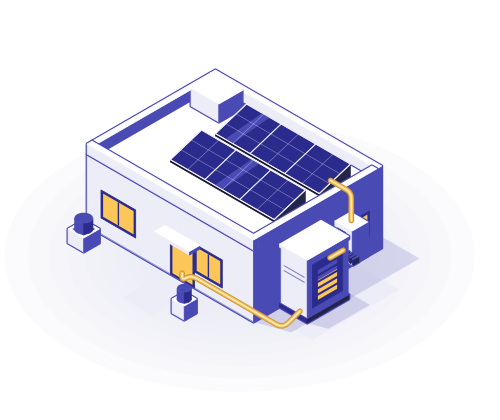
Mussafah workshops, KIZAD facilities, schools, and city-centre offices with daytime-heavy consumption: C&I solar.
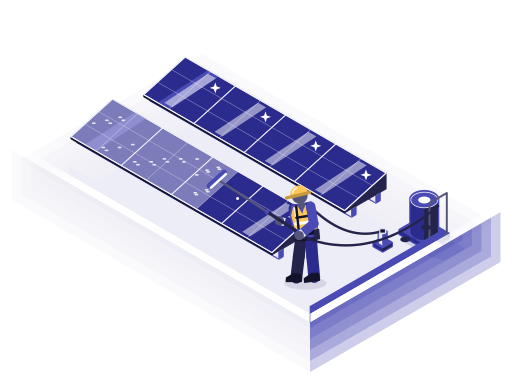
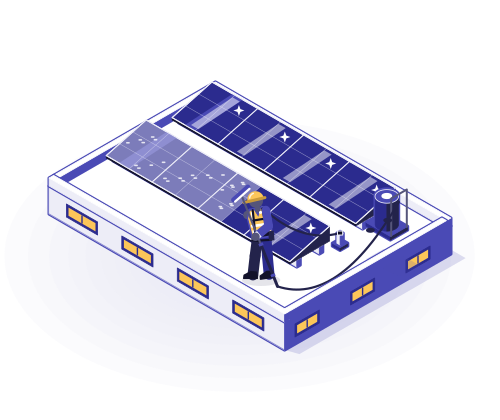
cleaning and maintenance tuned to the capital's inland dust and coastal humidity zones.
Your Abu Dhabi number, from one bill.
What solar really costs in the UAE → Indicative all-in prices, what moves the price, and the payback maths.