
Off-grid and generatorsExplainer
Off-Grid Solar for a New Factory: A Worked Example
A worked example, not a client project: how off-grid solar, a battery and an optional generator are designed for a new UAE factory waiting on its connection.
By Mujtaba Ali, Co-Founder & Director
4 min readLast reviewed
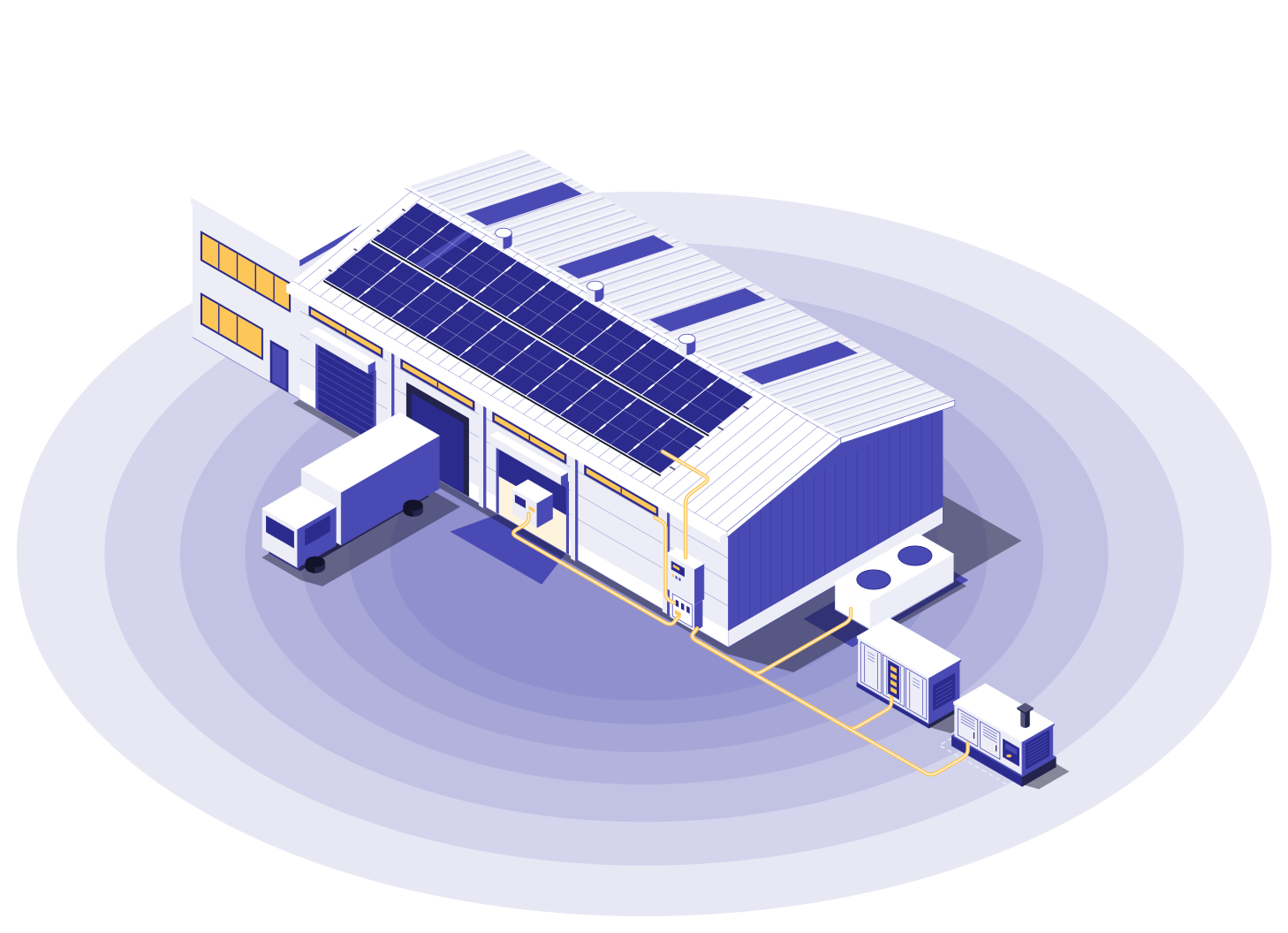
The short answer
This is a worked example, not a client project. The factory is made up, to show step by step how an off-grid design comes together: what we ask for, how the solar, the battery and the generator are sized, and how the site runs through a day.
On this page6 sections
- Worked example
- The factory on this page is made up. It shows how an off-grid design works; it is not a Solar Oasis client project.
The site
A new factory in an industrial area outside Dubai. The building is finished, but the supply is not. Connection charges are based on the load you connect. For a factory or large building they often run into hundreds of thousands of dirhams, and into millions where you also pay for a transformer or a substation. And the wait: a small connection can be quick. Larger loads that need network work can take many months, sometimes years.
The owner wants to start production now, not when the cable arrives. Until then, the plan was a rented diesel generator running all day.
What the factory runs:
- By day: the production machines on one shift, cooling for the hall, lights and the offices.
- In the evening: cooling winding down, lights, a few machines finishing their run.
- At night: security lights, the cameras and a small cold store.
Step 1: the load study, done virtually
We start from papers, not a site visit. For this factory, the owner sends:
- the equipment list, with the rating of each machine;
- the shift hours, and what keeps running after the shift;
- the generator's fuel receipts from a sister site with the same machines;
- the building drawings, so we can see the roof.
From these we draw the factory's day: how much it uses each hour, and the moments when the biggest loads start together. Those start-up moments matter as much as the total, because the system has to carry them without a dip. A site visit comes in only when the papers leave a question open.
Step 2: the design
Each part has one job:
- Solar on the roof, sized to carry the day shift and to charge the battery at the same time.
- A battery, optional and recommended, sized for the evening and the night load. Without it, the generator would run all night at a light load.
- A generator, optional, sized as a top-up: for the biggest loads starting together and for long dusty spells. It stays on site as backup.
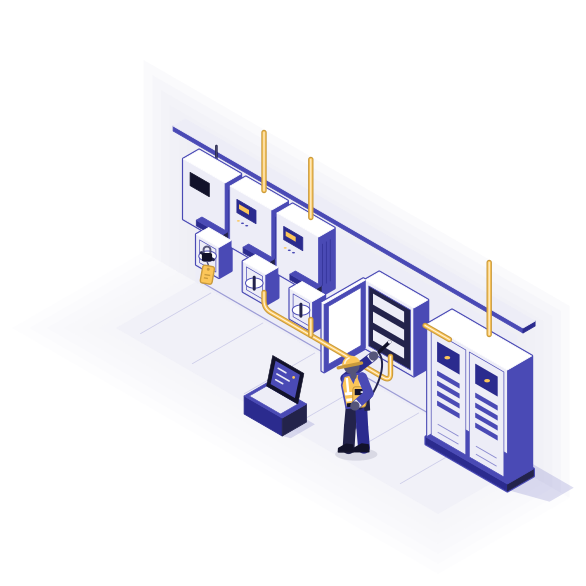
- A hybrid controller that is also a DG-PV synchronizer. It keeps solar and the generator running in step, and decides, second by second, whether the load runs on solar, the battery or the generator.
A generator should run above roughly a third of its rated load; below that it wastes fuel and wears faster. The battery is what keeps it out of that zone: the generator runs only when there is real work for it.
How the factory runs through a day
- Morning: as the sun comes up, solar takes over from the battery and starts the machines.
- Midday: solar runs the shift and fills the battery.
- Evening: the battery carries the load as the sun goes down.
- Night: the battery holds the security lights, the cameras and the cold store.
- A dusty week: when solar and the battery cannot hold the load, the controller starts the generator. It stops as soon as they can.
What changes for the owner
The factory can start production without waiting for the connection, with solar and the battery carrying most of the load. Diesel power typically costs three to four times what grid power costs, in fuel alone. So every hour the generator stays off is fuel the owner does not buy.
Every real site is different: the machines, the shifts and the roof change the answer. That is why each design starts from its own load study. For the full picture, see off-grid solar with generator backup, how long a connection takes and solar or a diesel generator.
What about Dubai?
Off-grid isn't offered for DEWA-connected sites in Dubai; it can be, for a site that isn't connected to DEWA, such as a remote site.
Off-grid design FAQs
All 48 questions →Keep reading
- How Long Does an Electricity Connection Take in the UAE?How long a new electricity connection takes in the UAE, what the charge is based on, and what a site can run on while it waits.
ExplainerOff-grid and generators4 min readReviewed
- Solar or a Diesel Generator: Which Costs Less to Run?Diesel power typically costs three to four times grid power in fuel alone. How solar compares for sites off the grid, and when to keep a generator for backup.
ExplainerOff-grid and generators4 min readReviewed
- How Does Shams Dubai Approval Work, Step by Step?Every step of DEWA's Shams Dubai process, from eligibility and NOCs to net metering, timelines and costs, explained in plain English.
Step by stepApprovals and rules6 min readReviewed
