Skip to content
Solar Oasis

A Pergola That Cuts Your Bill

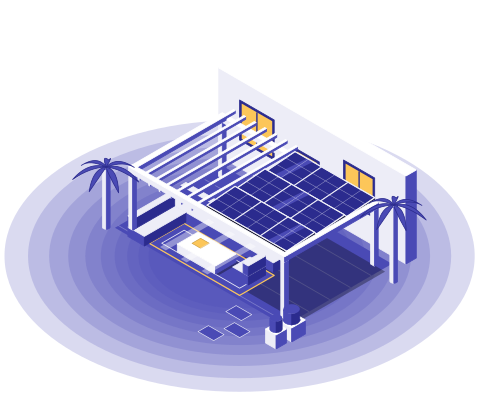
A solar pergola's roof is made of solar panels, so it shades a garden, terrace or courtyard and makes electricity.

  • We build them for villa gardens, cafe and restaurant terraces, hotels, office courtyards and schools.
  • It extends a rooftop system, or stands on its own.
  • Solar Oasis designs and installs solar pergolas in all seven emirates.

By Mujtaba Ali, Co-Founder & Director. Last reviewed .

typical villa pergola capacity
3–6 kWp
kWh a year, from a villa pergola
5,000–10,000
calculations for every structure
Wind-load
Outdoor space is where UAE life happens from October to May: the villa garden, the cafe terrace, the hotel pool deck, the office courtyard. From June to September it's what you shelter from. Either way, the structure that makes it usable can also be quietly cutting the bill all year.

Where design meets generation

This is the one solar product where aesthetics lead. A pergola sits where people gather: beside the majlis seating, over the outdoor kitchen, across a restaurant terrace or a hotel's pool deck. It has to be beautiful first. Our approach:

  • Design-first

    We choose frame styles, finishes and proportions to suit the building's architecture: glass-glass panels if you want dappled light, or solid panels for the most shade and output.

  • Panel as roof

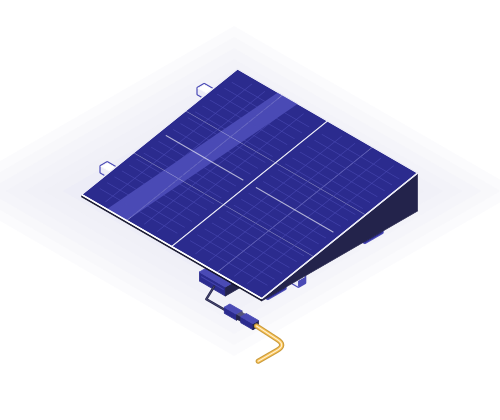
    Glass-glass modules can act as the finished ceiling, with filtered light below and generation above, so no second roof layer is needed.

  • Integrated everything

    We build concealed cabling, warm lighting, and fan and speaker wiring in the frame, with an optional rain channel for the winter weeks we all pretend to be surprised by.

What it does for your bill

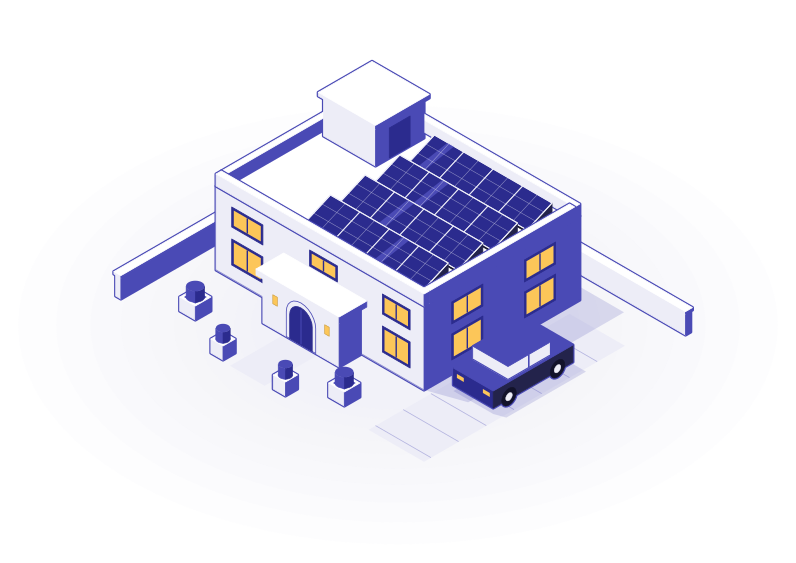
A pergola won't usually replace a full rooftop system. It complements one, or it's the way in when your roof isn't an option.

  • A typical villa pergola carries 3–6 kWp and makes roughly 5,000–10,000 kWh a year in UAE sun. A larger terrace or courtyard carries more.
  • Every unit the pergola makes powers the building first. In Dubai, surplus solar is exported and credited on your future bills under DEWA's Shams Dubai net metering. In Abu Dhabi, Sharjah and the Northern Emirates, systems are zero-export, so the pergola is sized to what the building uses by day.
  • It pairs well with a villa rooftop system, with a business system whose roof is already full, or with a carport out front.
Where a pergola’s power goes

In Dubai

By day
Powers the building first
Surplus solar is exported to the grid.
At night
Credited units
Credited on your future bills.

Outside Dubai

By day
Powers the building
Sized to what the building uses by day.
At night
The grid, as normal
Zero-export: nothing is sent out.

Estimate: 3–6 kWp × about 1,620–1,711 kWh per kWp a year (homes, tilted panels). Tentative estimate, depends on site conditions.

Why homes choose a solar pergola

  • The roof is off-limits

    Architectural roofs, tanks and AC units in the way, or developer restrictions on visible rooftop panels, can rule the roof out. The garden solves what the roof can't.

  • You wanted a pergola anyway

    If a pergola was already in the landscaping plan, the step up to solar is modest.

  • Visible commitment

    A rooftop system is invisible from the majlis. A solar pergola is sustainability your guests sit under.
For businesses: terraces, courtyards and outdoor spaces

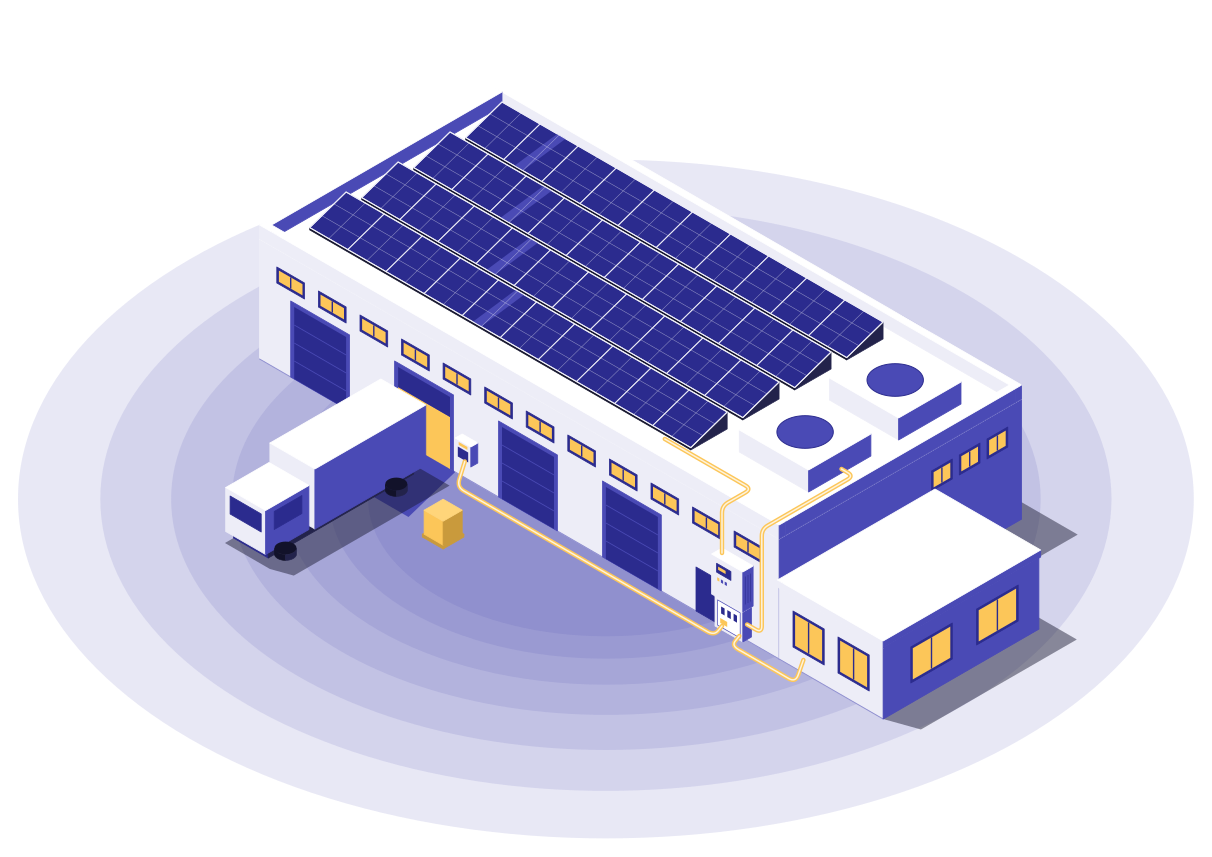
Wherever customers, guests, staff or students spend time outside, the shade can earn its keep:

  • Cafes and restaurants

    Guests can use the terrace for more of the year, and the panels overhead offset the daytime load of the kitchen and the air-conditioning.

  • Hotels and resorts

    On pool decks, garden lounges and walkways, shade is part of the stay, and the structure feeds the building's daytime use.

  • Offices

    Shaded courtyards and break areas give staff somewhere to go outside, and the panels help power the floors above.

  • Schools

    Shaded play areas, walkways and assembly spaces become a visible sustainability lesson over the students' heads.

Each one is designed to its site: span, height, glass-glass or solid panels, and the wind loads of an open terrace. Our team builds and installs it in all seven emirates.

Built properly, to every requirement

A solar pergola is a small building and a power plant, and we do both halves properly: engineered foundations and wind-load calculations for the structure, and design and installation by our team for the solar. The result is as well built as it is beautiful.

What a solar pergola costs

Custom pergolas are quoted per design: size, frame material, panel type (solid or glass-glass), and integrated extras set the price. A conventional pergola gives shade and never earns a dirham; the solar version's panels are the roof, and they cut your bill for the years you'd have owned the pergola anyway. The price on your proposal is the price you pay*: utility approvals included. Municipality fees and community NOCs are paid by the owner. *After your site survey.

Send one bill and a photo of the garden or terrace.

FAQs

All 47 questions →

It may. The structure can need a community or developer NOC, which the owner pays. Where one is needed, your proposal says so.

Yes. Cafe and restaurant terraces, hotel and resort outdoor areas, office courtyards and schools: anywhere a shaded outdoor space is used by day. Each one is designed and priced for its site.

All seven: Abu Dhabi, Dubai, Sharjah, Ajman, Umm Al Quwain, Ras Al Khaimah and Fujairah.

Glass-glass modules (glass on both faces) let soft, dappled light through, which looks lovely over seating. Solid modules give the most shade. We show you both under real sunlight before you choose.

Planning a garden, terrace or courtyard? Bring us the sketch. We'll show you what it could generate.

Send one bill and a photo of the garden, terrace or courtyard: we tell you what a solar pergola there would make.