
Costs and incentivesCosts
What Does Solar Cost in Each Emirate?
We work out the savings maths from the tariffs in Dubai, Abu Dhabi and the Northern Emirates, and show what it means for your villa or business in 2026.
By Basheer Ansari, Managing Director & Co-Founder
5 min readLast reviewed

The short answer
Solar hardware costs the same across the UAE; what changes by emirate is what each kilowatt-hour saves you. Expat villa tariffs run from 23 fils/kWh on the first slab to 38 fils on Dubai's top slab (26.8–30.5 fils in Abu Dhabi), so your tariff decides your payback. See your own payback in our calculator. It depends on your usage.
- per kWh on UAE expat villa tariffs, first slab to Dubai's top
- 23–38 fils
- output of a 10 kWp villa system, any emirate
- 16,200–17,110 kWh/yr
- a typical Dubai villa roof, under net metering
- Up to 30 kWp
On this page7 sections
- per kWh on UAE expat villa tariffs, first slab to Dubai's top
- 23–38 fils
- output of a 10 kWp villa system, any emirate
- 16,200–17,110 kWh/yr
- a typical Dubai villa roof, under net metering
- Up to 30 kWp
Why does the same system save different amounts?
A solar panel doesn't know which emirate it's in: a 10 kWp villa system, panels tilted to the sun, produces roughly 16,200–17,110 kWh/year anywhere in the UAE (yield ≈ 1,620–1,711 kWh per kWp, depending on the emirate). What differs is the value of each kilowatt-hour it replaces. Solar savings = production × your tariff. So the question "what does solar cost in the UAE?" is really "what does grid electricity cost where you live?" Here's that answer.
| Utility | Electricity charge | With solar, year one |
|---|---|---|
| DEWA | AED 1,500 | AED 99 |
| TAQA | AED 1,500 | AED 900 |
| SEWA | AED 1,500 | AED 855 |
| EtihadWE | AED 1,500 | AED 844 |
How this is worked out
Indicative, for a typical system. Assumes about 1,620–1,711 kWh per kWp a year for homes (tilted panels) and 1,517–1,602 for businesses, depending on emirate, published utility tariffs (as of September 2026) rising 3% a year, panel output falling 1% in year 1 and 0.4% a year after, and the electricity charge or kWh you enter (not water, sewerage or housing fees). Savings are a share of the electricity charge, shown with VAT as on your bill. Prices excl. VAT; home paybacks include the 5% VAT a household pays. Utility approvals included; municipality fees and NOCs excluded. Your survey-based proposal is fixed.
What does solar save in Dubai (DEWA)?
DEWA residential tariffs are progressive:
0–2,000 kWh
- Rate
- 23 fils/kWh
2,001–4,000 kWh
- Rate
- 28 fils/kWh
4,001–6,000 kWh
- Rate
- 32 fils/kWh
6,001+ kWh
- Rate
- 38 fils/kWh
The slab system is why big villas save more: solar production offsets your last units first: the 32–38 fils ones. A villa consuming 6,500 kWh/month pays 38 fils for its top units and 23 fils for its first; solar deletes the expensive end.
Worked example: villa with an average monthly electricity charge of AED 1,500: with net metering the estimator sizes the system to the whole consumption, up to a typical villa roof of about 30 kWp, saving about AED 1,401/month in year one. The calculator adds an indicative all-in price and payback for your bill.
Dubai extras: The price on your proposal is the price you pay: utility approvals included. Municipality fees and community NOCs are paid by the owner. In Dubai, we design villa systems for net metering under Shams Dubai; we don't offer batteries there.
- Slab
- DEWA charges each block of monthly use at its own rate, so the last units you use cost the most per kWh.
- Fuel surcharge
- A per-kWh charge on top of the slab rate; the table shows the slabs before it.
What does solar save in Abu Dhabi (TAQA)?
In Abu Dhabi, electricity comes from ADDC and AADC under TAQA, regulated by the Department of Energy (DoE). The published tariff for expat villas has two bands:
Expat villa, ≤200 kWh/day
- Rate
- 26.8 fils/kWh
Expat villa, >200 kWh/day
- Rate
- 30.5 fils/kWh
Expat villas: flat-ish high rates mean every solar unit earns 26.8–30.5 fils. The economics are sound, and the payback depends on your usage: the rate is flat, so there is no expensive top slab for solar to delete first.
- ADDC and AADC
- Abu Dhabi's distribution companies, under TAQA. The regulator is the Department of Energy (DoE).
What about Sharjah?
In Sharjah, systems are zero-export, with hybrid (battery) and off-grid options. Sharjah publishes its own tariff schedule, and the savings logic mirrors the rest of the country: the higher your tariff and consumption, the faster the payback. (Sharjah details →)
- SEWA
- Sharjah's electricity and water utility.
What about Ajman and the Northern Emirates (EtihadWE)?
EtihadWE serves the four northern emirates with tariffs that, for expat residential accounts, sit in the upper range nationally. A structural advantage: property types skew standalone (fewer NOC labyrinths than Dubai master communities).
Typical outcome: savings that depend on your usage. See your own payback in our calculator. It depends on your usage. (Ajman · UAQ · RAK · Fujairah)
- Connected load
- The total rating of your electrical connection. EtihadWE caps a system's size against it.
How do the emirates compare at the same bill?
Same average monthly villa electricity charge, four rulebooks: system size and first-year saving, computed by the same estimator as the calculator on our pricing page:
Dubai (DEWA)
- Charge AED 800/mo
- 18 kWp · ~AED 781/mo
- Charge AED 1,500/mo
- 30 kWp · ~AED 1,401/mo
- Charge AED 2,500/mo
- 30 kWp · ~AED 1,641/mo
Abu Dhabi (TAQA), expat villa
- Charge AED 800/mo
- 8 kWp · ~AED 306/mo
- Charge AED 1,500/mo
- 16 kWp · ~AED 600/mo
- Charge AED 2,500/mo
- 25 kWp · ~AED 1,064/mo
Sharjah
- Charge AED 800/mo
- 8 kWp · ~AED 337/mo
- Charge AED 1,500/mo
- 13 kWp · ~AED 645/mo
- Charge AED 2,500/mo
- 20 kWp · ~AED 1,129/mo
Northern emirates (EtihadWE)
- Charge AED 800/mo
- 7 kWp · ~AED 326/mo
- Charge AED 1,500/mo
- 13 kWp · ~AED 656/mo
- Charge AED 2,500/mo
- 20 kWp · ~AED 1,146/mo
Price and payback for your own charge come from the calculator.
The saving grows with consumption: solar rewards exactly the households that use the most in August.

What stays the same in every emirate?
- Hardware quality: the panels and approved inverters named in your proposal: same spec nationwide.
- One inverter replacement to budget for over the system's life.
- Dust: regular cleaning protects production everywhere, coastal or inland.
- The honest rule: if your consumption is low or your tariff is low, solar might not pay, and the assessment should say so. Ours does.
- Inverter
- The part that turns the panels' DC into AC for your home. Budget for one replacement over the system's life.
Keep reading
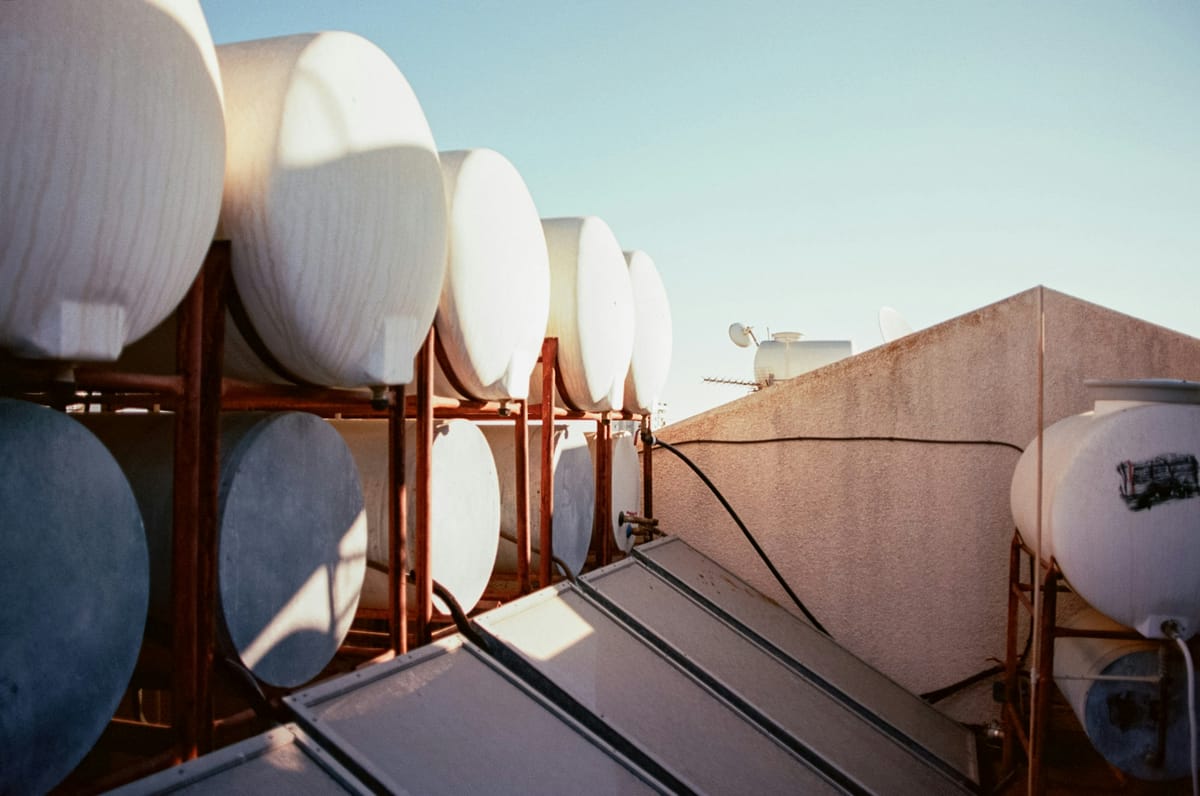
- Is a Solar Water Heater Worth It in the UAE?Hot water is an easy job for the sun. We cover who a solar water heater suits, which tank and collector to pick, and how it differs from solar panels (PV).
ComparisonCosts and incentives3 min readReviewed
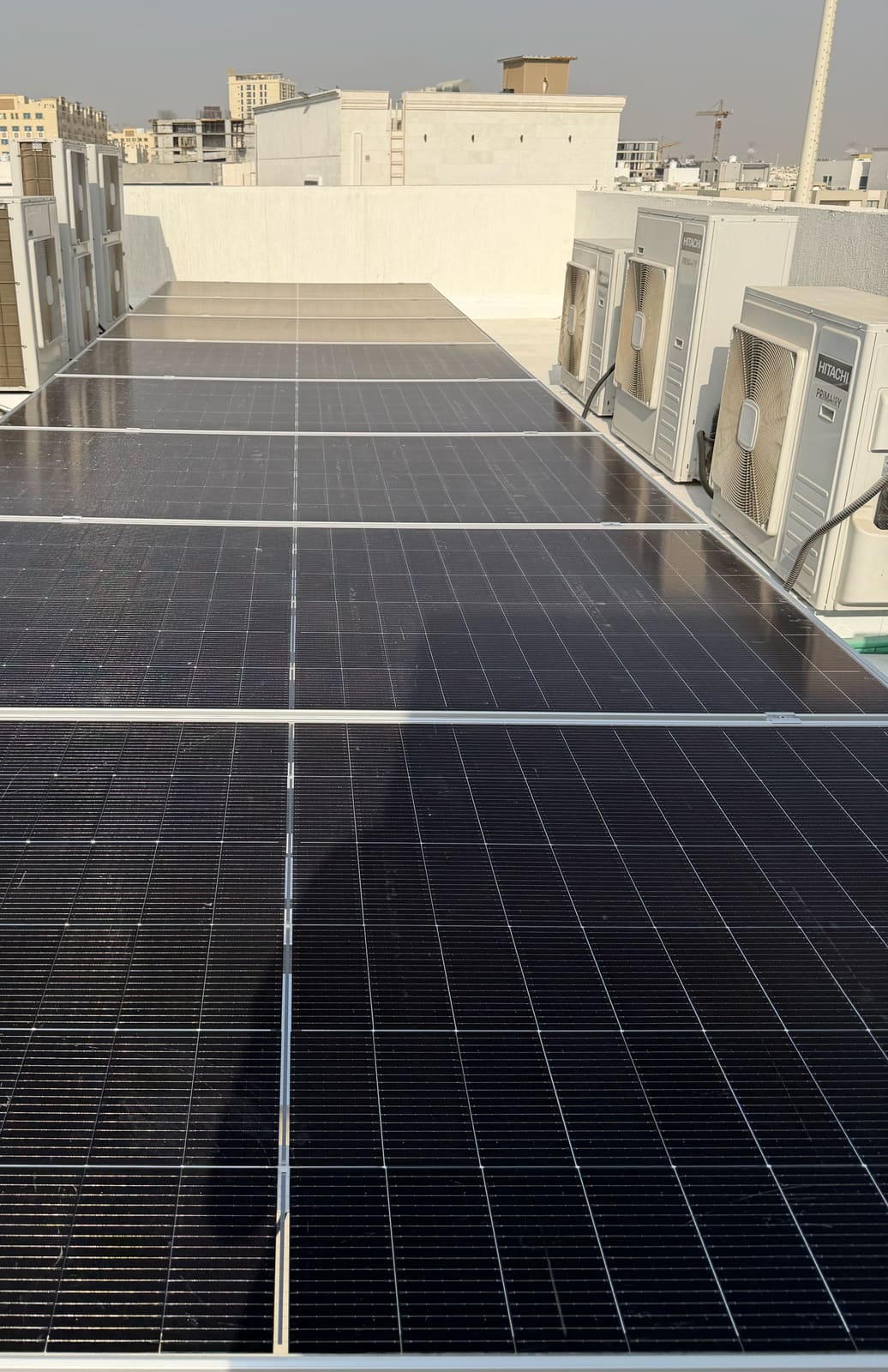
- What Solar Incentives Does the UAE Offer?Grants are the first thing many customers ask about. We explain what the UAE offers instead, utility by utility, and how each one's rules change your case.
ExplainerCosts and incentives4 min readReviewed
- What Does Villa Solar Cost in Dubai?What Dubai villa solar costs by DEWA bill size, how villas connect under Shams Dubai, and the payback net metering gives you, worked from real tariffs.
CostsCosts and incentives4 min readReviewed




Your emirate, your tariff, your roof: the real number takes one bill and one day.
Your bill has the answer. Calculate your savings now, or WhatsApp us your bill and a real person reads it. Then book your free site survey & energy check.