
Costs and incentivesCosts
What Does Villa Solar Cost in Dubai?
What Dubai villa solar costs by DEWA bill size, how villas connect under Shams Dubai, and the payback net metering gives you, worked from real tariffs.
By Basheer Ansari, Managing Director & Co-Founder
4 min readLast reviewed
The short answer
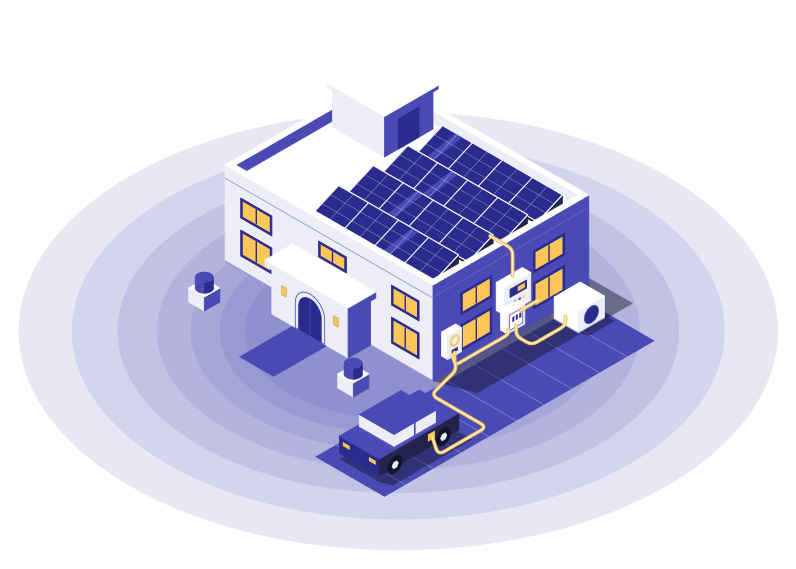
A Dubai villa system is priced all-in from your electricity bill, utility approvals included, and our calculator gives an indicative price. Most villas need 6 kWp to 30 kWp, sized to their consumption up to a typical roof of about 30 kWp. We design every Dubai villa for net metering under Shams Dubai: a grid connection, no batteries.
- a typical villa roof, sized to your whole consumption
- Up to 30 kWp
- All-in: utility approvals included in the price.
- Your payback: worked out from your own bill in the calculator.
On this page7 sections
- a typical villa roof, sized to your whole consumption
- Up to 30 kWp
- All-in: utility approvals included in the price.
- Your payback: worked out from your own bill in the calculator.
What size system does a Dubai villa need?
The estimator sizes a villa to its electricity charge, and the saving follows:
AED 800
- System the estimator sizes
- 18 kWp
- Saving, year one
- ~AED 781/mo
AED 1,200
- System the estimator sizes
- 26 kWp
- Saving, year one
- ~AED 1,175/mo
AED 1,500
- System the estimator sizes
- 30 kWp
- Saving, year one
- ~AED 1,401/mo
AED 2,500
- System the estimator sizes
- 30 kWp
- Saving, year one
- ~AED 1,641/mo
AED 4,000
- System the estimator sizes
- 30 kWp
- Saving, year one
- ~AED 1,901/mo
Net metering lets a villa size to its whole consumption, up to a typical roof of about 30 kWp. The charge is the electricity part of your DEWA bill, not the water, sewerage or housing fees. The calculator adds an indicative all-in price for your own charge. Outside Dubai the same charge buys a different system: see what solar costs in each emirate.
- Electricity charge
- The electricity part of your DEWA bill, without water, sewerage and the housing fee. Every figure here is a share of it.
- kWp
- Kilowatt-peak: an array's rated output in full sun. A typical villa roof holds about 30 kWp.
| Monthly charge, AED | Electricity charge | With solar, year one |
|---|---|---|
| 800 | AED 800 | AED 19 |
| 1,200 | AED 1,200 | AED 25 |
| 1,500 | AED 1,500 | AED 99 |
| 2,500 | AED 2,500 | AED 859 |
| 4,000 | AED 4,000 | AED 2,099 |
How this is worked out
Indicative, for a typical system. Assumes about 1,620–1,711 kWh per kWp a year for homes (tilted panels) and 1,517–1,602 for businesses, depending on emirate, published utility tariffs (as of September 2026) rising 3% a year, panel output falling 1% in year 1 and 0.4% a year after, and the electricity charge or kWh you enter (not water, sewerage or housing fees). Savings are a share of the electricity charge, shown with VAT as on your bill. Prices excl. VAT; home paybacks include the 5% VAT a household pays. Utility approvals included; municipality fees and NOCs excluded. Your survey-based proposal is fixed.
What does DEWA require?
Every villa system goes through DEWA's design review and a final inspection before it is connected; the Shams Dubai guide walks through each step. The design covers:
- the single-line diagram (SLD),
- the load calculation,
- electrical protection and safety,
- equipment from DEWA's List of Eligible Equipment.
Most master communities also issue a No-Objection Certificate (NOC) before installation.
What you pay: The price on your proposal is the price you pay: utility approvals included. Municipality fees and community NOCs are paid by the owner.
- SLD
- The single-line diagram: the wiring drawing DEWA reviews before it approves a design.
How do we design a Dubai villa system?
To meet DEWA's requirements, we design your villa system as:
- On-grid / grid-tied
- No batteries (we don't offer them in Dubai)
- No hybrid inverters
- Panels named in your proposal
- DEWA-approved inverter
- Correct AC/DC isolation and protection
- Monitoring system activated
- Clean, safe rooftop cable routing
In Dubai we design for net metering only: no hybrid or battery options for villas. Compare panel brands in our solar panel brands guide.
What changes the final price?
Eight things move the price:
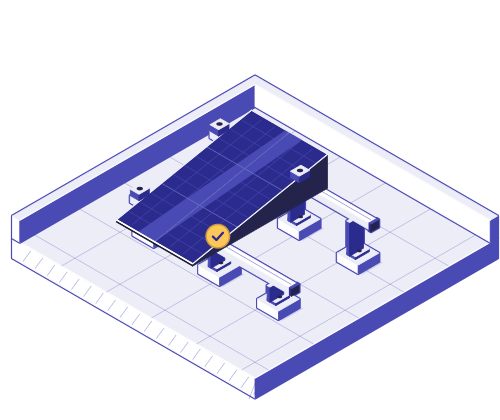
- System size (6 kWp to 30 kWp)
- Panel brand
- DEWA-approved inverter brand
- Roof type (tiled, flat, steel)
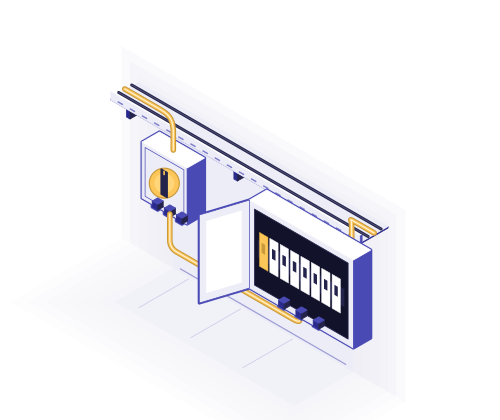
- Distance from roof to main DB
- Number of isolators required
- Cable + conduit routing
- Community layout restrictions
What is included in a Dubai villa installation?
Every Dubai villa installation includes:
- High-efficiency solar panels
- DEWA-approved on-grid inverter
- Aluminum mounting structure
- AC/DC breakers
- Surge protection devices
- Monitoring app setup
- Safe, clean rooftop installation
No batteries and no hybrid: in Dubai we design villa systems for net metering and don't offer these.

How long is the payback in Dubai?
Dubai uses net metering, meaning excess daytime solar is exported and credited on your DEWA bill.
Under Shams Dubai net metering, villas can cut their electricity bill by 90% or more, up to a typical roof of about 30 kWp.
Your payback depends on:
- Number of ACs
- Day vs night usage
- System size
- Roof direction + shading
See your own payback in our calculator. It depends on your usage.
- Net metering
- Surplus solar is exported to DEWA's grid and credited on your future bills.
What does Solar Oasis handle for you?
Solar Oasis provides:
- Villa sizing from 6 kWp to 30 kWp
- Panels named in your proposal
- A design to DEWA's requirements, including the single-line diagram
- Clean rooftop installation
- Grid-tied inverter setup
- Monitoring system activation
- A savings estimate worked from your own bill
Every system is designed to your utility's current rules: DEWA, SEWA, TAQA or EtihadWE. We design and install in all seven emirates.
Keep reading
- What Does Solar Cost in Each Emirate?We work out the savings maths from the tariffs in Dubai, Abu Dhabi and the Northern Emirates, and show what it means for your villa or business in 2026.
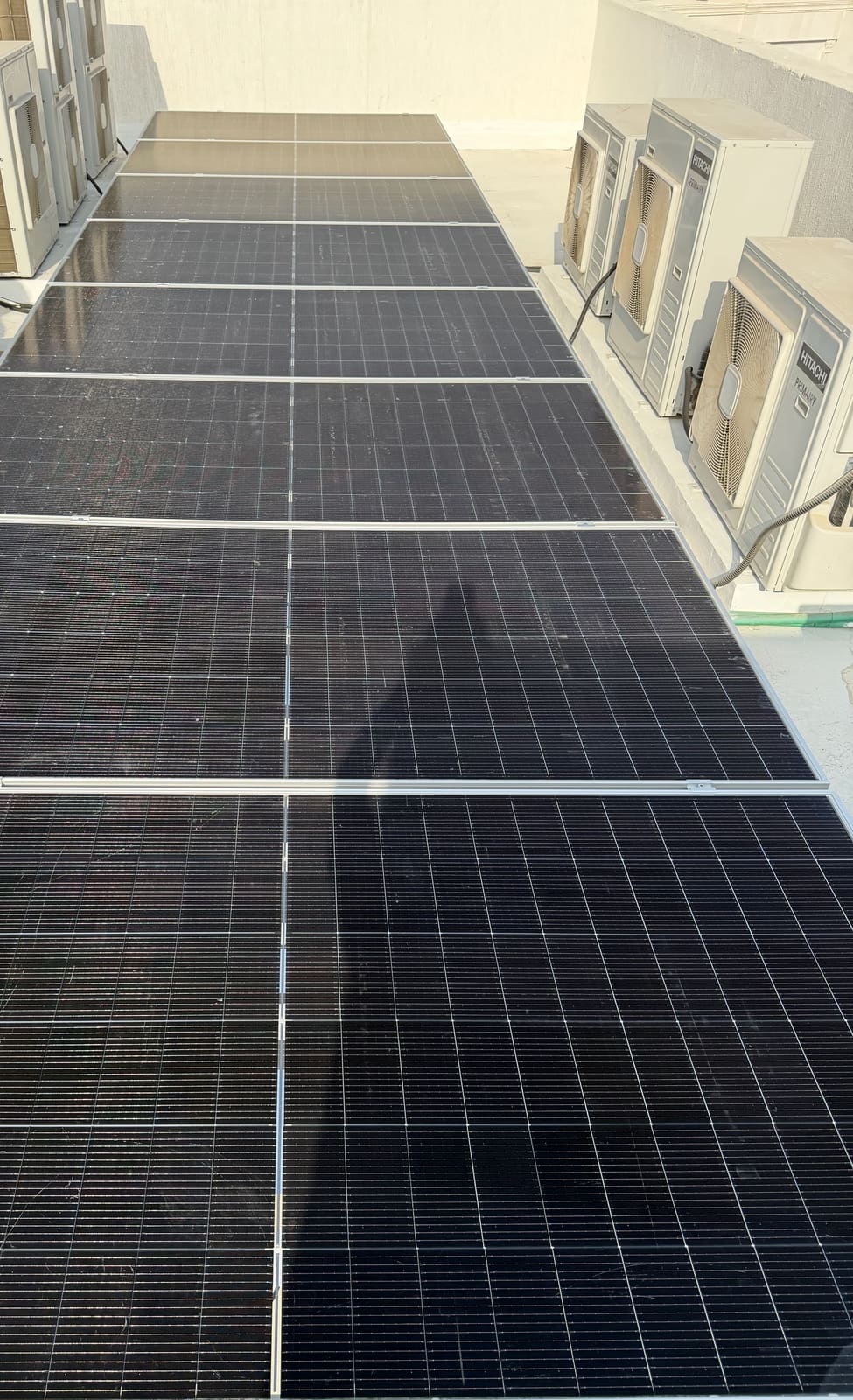
CostsCosts and incentives5 min readReviewed
- Is a Solar Water Heater Worth It in the UAE?Hot water is an easy job for the sun. We cover who a solar water heater suits, which tank and collector to pick, and how it differs from solar panels (PV).
ComparisonCosts and incentives3 min readReviewed
- What Solar Incentives Does the UAE Offer?Grants are the first thing many customers ask about. We explain what the UAE offers instead, utility by utility, and how each one's rules change your case.
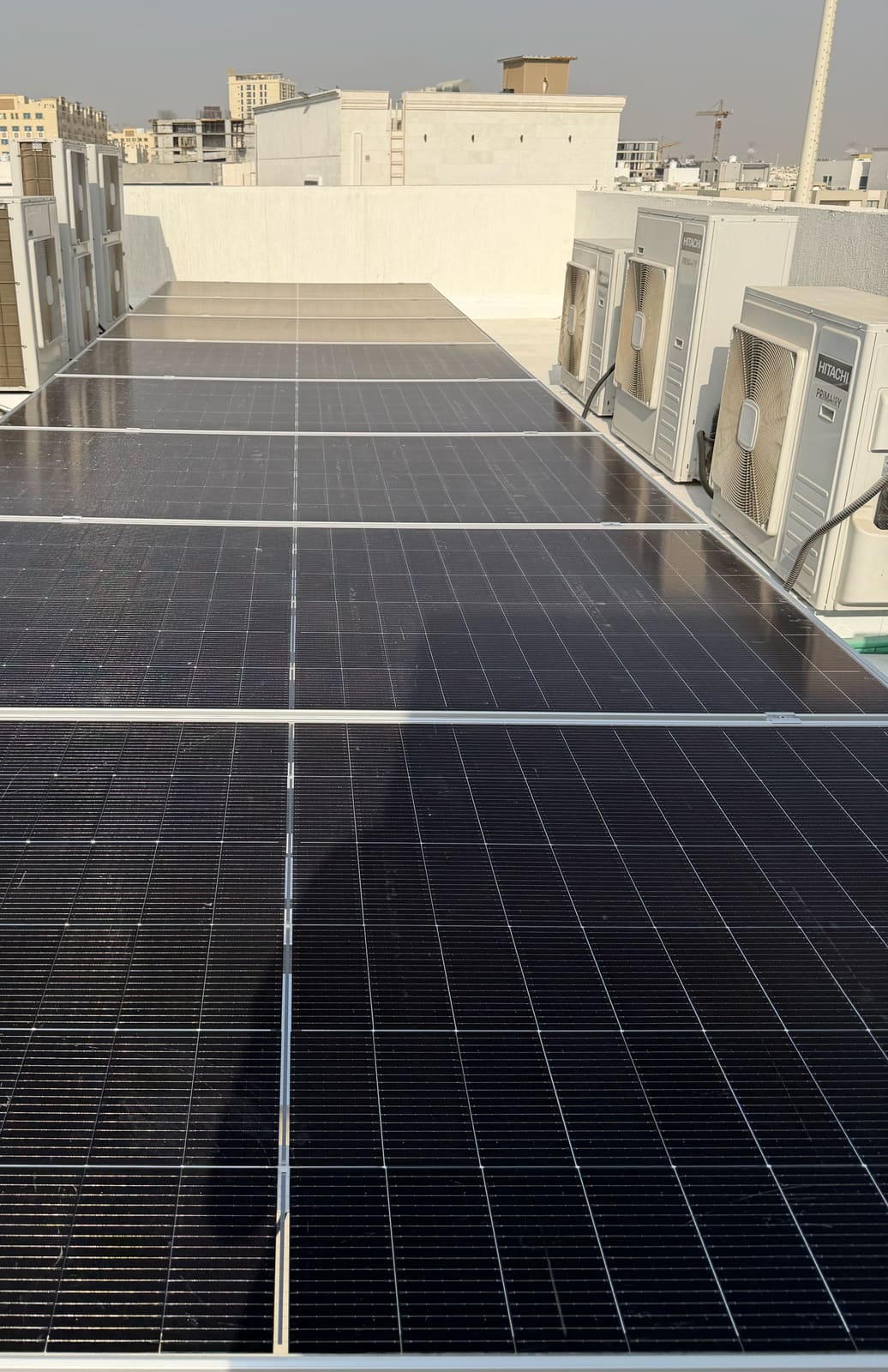
ExplainerCosts and incentives4 min readReviewed


Your DEWA bill already holds your number. Send it.
Your bill has the answer. Calculate your savings now, or WhatsApp us your bill and a real person reads it. Then book your free site survey & energy check.