
From the blogExplainer
What Are the Benefits of Solar Energy in the UAE?
Why UAE homes and businesses go solar: a lower bill, a system designed to each utility's rules, long-life panels with light upkeep, and cleaner power.
By Mujtaba Ali, Co-Founder & Director
3 min readLast reviewed

The short answer
The main benefit is a smaller electricity bill every month, from equipment built to last. Panels carry a 25–30 year performance warranty. Solar works in every emirate under its own utility's rules, needs little beyond regular cleaning, and moves you toward the UAE's clean energy goals. How much you save depends on your usage, your roof and your emirate.
- of solar installed by Solar Oasis for UAE homes and businesses
- 350 kW+
On this page4 sections
- of solar installed by Solar Oasis for UAE homes and businesses
- 350 kW+
What does solar save you?
Every kilowatt-hour your roof makes is one you do not buy from the grid. In the UAE, where air-conditioning runs most of the year and the sun shines almost every day, that adds up quickly.
For example, a villa in Ajman with an average monthly electricity charge of AED 1,500 would typically install about 13 kWp and save about AED 656 a month in the first year. EtihadWE sizes are subject to 10% of your connected load. See your own payback in our calculator. It depends on your usage.
The saving keeps coming for as long as the panels produce, and it grows when tariffs rise. That is why we work your payback out from your own bill rather than quote a typical figure.

Does it work in every emirate?
Yes, under each utility's own rules. In Dubai, your system is connected under DEWA's Shams Dubai net metering: surplus solar is exported and credited on your future bills. In Abu Dhabi, Sharjah and the Northern Emirates, systems are zero-export, with hybrid (battery) and off-grid options.
Every system is designed to your utility's current rules: DEWA, SEWA, TAQA or EtihadWE. We install components on your utility's approved list.
Every system is built for the emirate it stands in: net metering in Dubai, zero-export everywhere else.
- Zero-export
- A system sized and controlled so that no power flows back into the grid.

How long does it last, and what upkeep does it need?
Panels carry a 25–30 year performance warranty. The inverter is the part to budget for: plan on replacing it once over the system's life. Every quote names the panels and inverter and states their warranties, so you know what is covered before you sign.
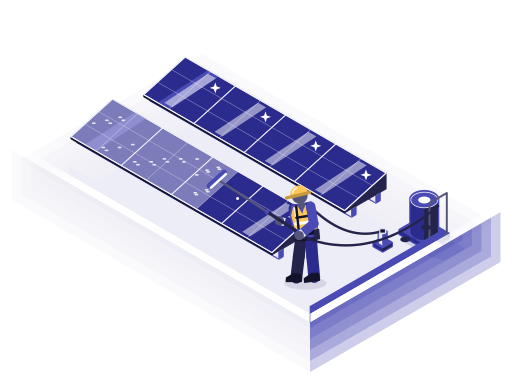
Upkeep is mostly cleaning. Dust is the main thing that lowers output in the UAE, so panels are washed monthly to quarterly depending on where you are, and inspected once a year. A monitoring app shows production every day, so a drop is visible before it costs much. See maintenance and care.
Does it help the UAE's clean energy goals?
Yes. The UAE was the first Middle East and North Africa (MENA) nation to commit to Net Zero by 2050, and the UAE Energy Strategy 2050 aims to triple the contribution of renewable energy by 2030. Every rooftop system adds to that.
For the numbers in your emirate, read solar costs by emirate; for Dubai approvals, the Shams Dubai guide.
Go deeper in the guides
This post tells one part of the story. The guides answer the questions it raises: what solar costs in your emirate, the ways to pay, which equipment stands up to UAE heat, and how to choose an installer.
- What Does Solar Cost in Each Emirate?We work out the savings maths from the tariffs in Dubai, Abu Dhabi and the Northern Emirates, and show what it means for your villa or business in 2026.
CostsCosts and incentives5 min readReviewed
- How Can You Pay for Solar in the UAE?Most customers buy their solar system outright and own it, and its savings, from day one. Here is how each way to pay works, and the questions to ask.
ComparisonWays to pay6 min readReviewed
- Do Solar Panels Work in UAE Heat and Dust?How 45°C heat, dust and humidity really affect solar output in the UAE, and the engineering that keeps systems producing year after year.
ExplainerEquipment5 min readReviewed


